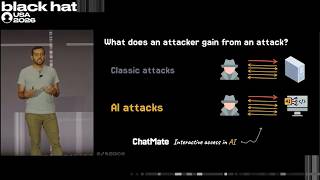
ChatMate: Remote Prompt Execution on AI Assistants through Sandbox Escaping
Ori LahavBlack Hat USA 2026
Andres Riancho is a seasoned application and cloud security professional focused on offensive and Internet-scale research. Andres worked as an application security consultant for most of their career, delivered secure coding trainings for developers around the world, founded their own consultancy firm, and worked as a Director of Web Security for Rapid7 to improve NeXpose's web application security scanner. More than ten years ago, Andres started w3af, an open source web application security scanner, which helps users identify and exploit vulnerabilities in their web applications. w3af's popularity allowed Andres to speak at multiple international conferences and meet with the world's best hackers. Andres is currently working in Wiz's Vulnerability Research team, focusing on Cloud Security and Internet-scale vulnerability identification.
Hillai Ben-Sasson (@hillai) is a Security Researcher based in Israel. As part of the Wiz Research Team, Hillai specializes in research and exploitation of web applications, application security, and finding vulnerabilities in complex high-level systems. Hillai is a frequent speaker in security conferences, and has been recognized in MSRC's Most Valuable Researchers leaderboard.
Ronen Shustin is a Security Researcher on the Wiz Research team, specializing in vulnerability research and practical hacking. His passion is to tackle complex systems to find critical security flaws and demonstrate their real-world impact.
Most AI applications run on NVIDIA hardware and use NVIDIA's tools to isolate workloads that share infrastructure. This team found a critical flaw in the NVIDIA Container Toolkit that lets an attacker escape a container to the host, often taking the whole Kubernetes cluster with it. Every major AI platform they tested was affected, and on some they reached other customers' data and credentials. They compare two case studies with very different outcomes, Replicate and DigitalOcean, and share what cloud providers do behind the scenes. It's for anyone running AI or container workloads in the cloud.
Did you find what you came for?
Thanks, that helps us improve this page.